.webp)

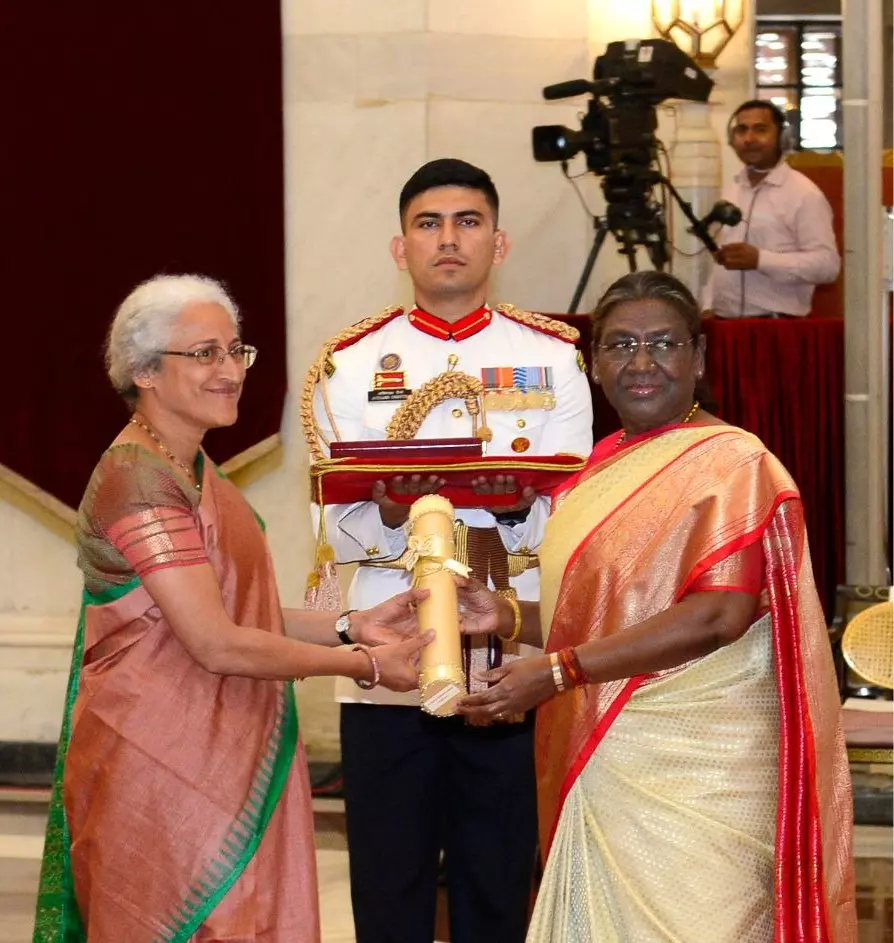


Table of Content
Want to know who receives India's highest civilian honour and why? Explore the complete history of the Bharat Ratna, winners list, eligibility, benefits, and selection process in one place.
History Of The Bharat Ratna
The Bharat Ratna (India’s highest civilian award) was introduced by President Dr. Rajendra Prasad on 2 January 1954. The main motive of this award is to honor people who have made an exceptional contribution to the country.
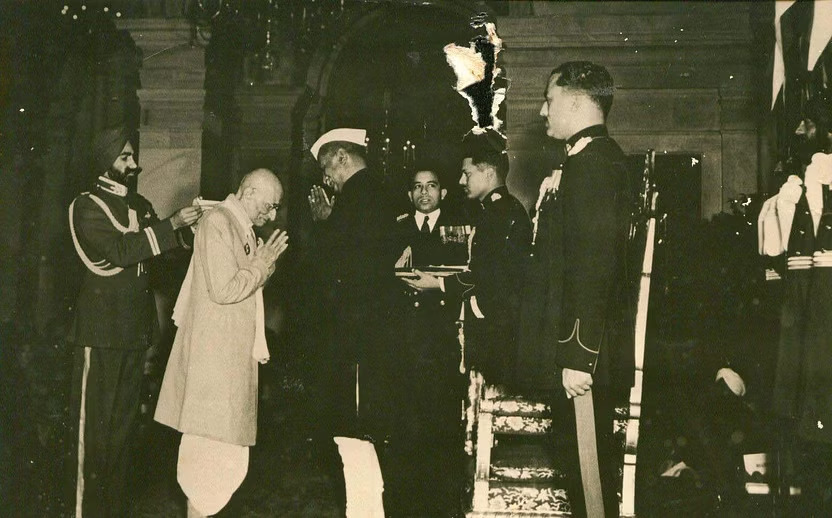
The term ‘Bharat Ratna’ means ‘Gem Of India’. Thus, it is not just a medal but a symbol of national pride and respect. The First Bharat Ratna recipients were C. Rajagopalachari (respected statesman), Sarvepalli Radhakrishnan (great philosopher), and C. V. Raman (Nobel Prize-winning scientist).
Eligibility Criteria
To fit in the Bharat Ratna eligibility criteria, the contribution must be exceptional and of the highest order. Any person can be considered, regardless of race, religion, gender, occupation, profession or background.
It means that the Bharat Ratna honors excellence in different fields. It may include public affairs, science, literature, art, and social service.
The award can also be given after the individual has died, which is known as Posthumously. In uncommon instances, non-citizens have likewise been recognized.
Also Read: Grammy Awards 2026 Winners List: Where Can You Stream In India?
Bharat Ratna Winners List
Throughout the years, this esteemed award has been presented to remarkable leaders, scientists, artists, social activists, and sports legends whose contributions have made a significant mark on India.
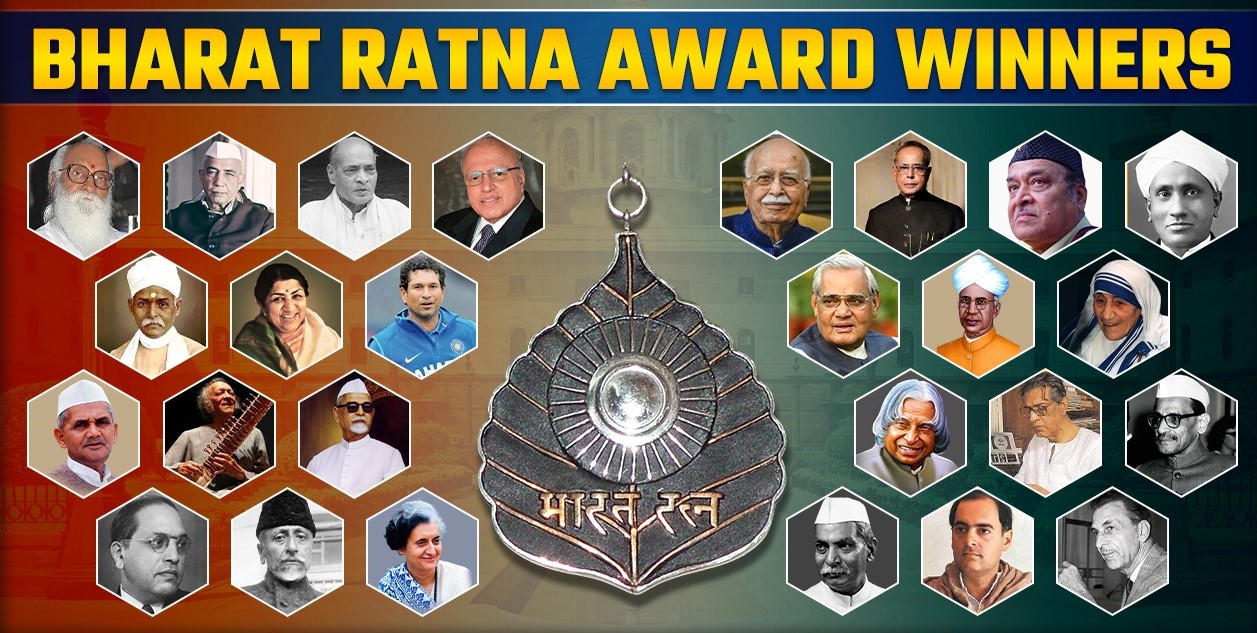
The table below provides a brief overview of the Bharat Ratna winners list, the year they were awarded, and the reasons for their recognition.
|
Bharat Ratna Winners List |
||
|
Year |
Awardee Name |
Contribution |
|
1954 |
C. Rajagopalachari |
Contribution to public life and nation-building. |
|
1954 |
Sarvepalli Radhakrishnan |
Excellence in philosophy, education, and public service. |
|
1954 |
C. V. Raman |
Outstanding contribution to science, especially physics. |
|
1955 |
Bhagwan Das |
Service in education, philosophy, and social reform. |
|
1955 |
M. Visvesvaraya |
Major contribution to engineering and nation-building. |
|
1955 |
Jawaharlal Nehru |
Leadership as India’s first Prime Minister. |
|
1957 |
Govind Ballabh Pant |
Public service and leadership in Indian politics. |
|
1958 |
Dhondo Keshav Karve |
Work in women’s education and social reform. |
|
1961 |
Bidhan Chandra Roy |
Public service and contribution to medicine. |
|
1961 |
Purushottam Das Tandon |
Contribution to Indian public life and social work. |
|
1962 |
Rajendra Prasad |
Leadership and service as India’s first President. |
|
1963 |
Zakir Husain |
Contribution to education and public life. |
|
1963 |
Pandurang Vaman Kane |
Scholarship in Sanskrit and ancient Indian law. |
|
1966 |
Lal Bahadur Shastri |
Posthumous recognition for leadership and national service. |
|
1971 |
Indira Gandhi |
Leadership and political service as Prime Minister. |
|
1975 |
V. V. Giri |
Public service and leadership. |
|
1976 |
K. Kamaraj |
Posthumous recognition for political leadership and service. |
|
1980 |
Mother Teresa |
Humanitarian work and service to the poor. |
|
1983 |
Vinoba Bhave |
Social reform and work for land redistribution. |
|
1987 |
Khan Abdul Ghaffar Khan |
Peace, freedom struggle, and social service. |
|
1988 |
M. G. Ramachandran |
Posthumous recognition for political and social contribution. |
|
1990 |
B. R. Ambedkar |
Posthumous recognition for social justice and Constitution making. |
|
1990 |
Nelson Mandela |
Struggle against apartheid and commitment to justice. |
|
1991 |
Rajiv Gandhi |
Posthumous recognition for political leadership. |
|
1991 |
Vallabhbhai Patel |
Contribution to national integration. |
|
1991 |
Morarji Desai |
Public service and leadership as Prime Minister. |
|
1992 |
Abul Kalam Azad |
Contribution to education and India’s freedom struggle. |
|
1992 |
J. R. D. Tata |
Contribution to industry and nation-building. |
|
1992 |
Satyajit Ray |
Excellence in cinema and artistic contribution. |
|
1997 |
A. P. J. Abdul Kalam |
Contribution to science and missile development. |
|
1997 |
Gulzarilal Nanda |
Public service and political leadership. |
|
1997 |
Aruna Asaf Ali |
Role in India’s freedom movement. |
|
1998 |
M. S. Subbulakshmi |
Excellence in Carnatic music. |
|
1998 |
Chidambaram Subramaniam |
Contribution to agriculture and food security. |
|
1999 |
Jayaprakash Narayan |
Posthumous recognition for public movement and social reform. |
|
1999 |
Amartya Sen |
Contribution to economics and human development. |
|
1999 |
Gopinath Bordoloi |
Posthumous recognition for public service. |
|
1999 |
Ravi Shankar |
Contribution to Indian classical music. |
|
2001 |
Lata Mangeshkar |
Legendary contribution to Indian music. |
|
2001 |
Bismillah Khan |
Indian classical shehnai player. |
|
2009 |
Bhimsen Joshi |
Indian classical vocalist. |
|
2014 |
Sachin Tendulkar |
Excellence in cricket and sports. |
|
2014 |
C. N. R. Rao |
Contribution to science and chemistry. |
|
2015 |
Atal Bihari Vajpayee |
Leadership and service as Prime Minister. |
|
2015 |
Madan Mohan Malaviya |
Posthumous recognition for education and public service. |
|
2019 |
Bhupen Hazarika |
Posthumous recognition for music and cultural contribution. |
|
2019 |
Pranab Mukherjee |
Leadership and public service as President of India. |
|
2019 |
Nanaji Deshmukh |
A social activist from India, education, health, and rural self-reliance. |
|
2024 |
P. V. Narasimha Rao |
Posthumous recognition for leadership and reforms. |
|
2024 |
Chaudhary Charan Singh |
Posthumous recognition for work in farmers’ welfare. |
|
2024 |
M. S. Swaminathan |
Agricultural research and food security. |
|
2024 |
Karpoori Thakur |
Posthumous recognition for social justice and public service. |
|
2024 |
L. K. Advani |
Political leadership and public life. |
From the above list - Lal Bahadur Shastri, K. Kamaraj, Vinoba Bhave, M.G. Ramachandran, B.R. Ambedkar, Rajiv Gandhi, Sardar Vallabhbhai Patel, Maulana Abul Kalam Azad, Aruna Asaf Ali, Jayaprakash Narayan, Gopinath Bordoloi, Nanaji Deshmukh, Bhupen Hazarika, P.V. Narasimha Rao, Chaudhary Charan Singh, M.S. Swaminathan, and Karpoori Thakur are the Bharat Ratna Posthumous Recipients.
Also Read: BAFTA Awards 2026 Winners List & India's Historic Win
Selection Process
The process starts with suggestions provided by the Prime Minister of India. There is no official public nomination process for the award.
The suggestions are presented to the President of India, who officially awards the Bharat Ratna to those approved.
Following presidential endorsement, the Government of India and the President’s office officially disclose the names of the recipients.
Medal Design
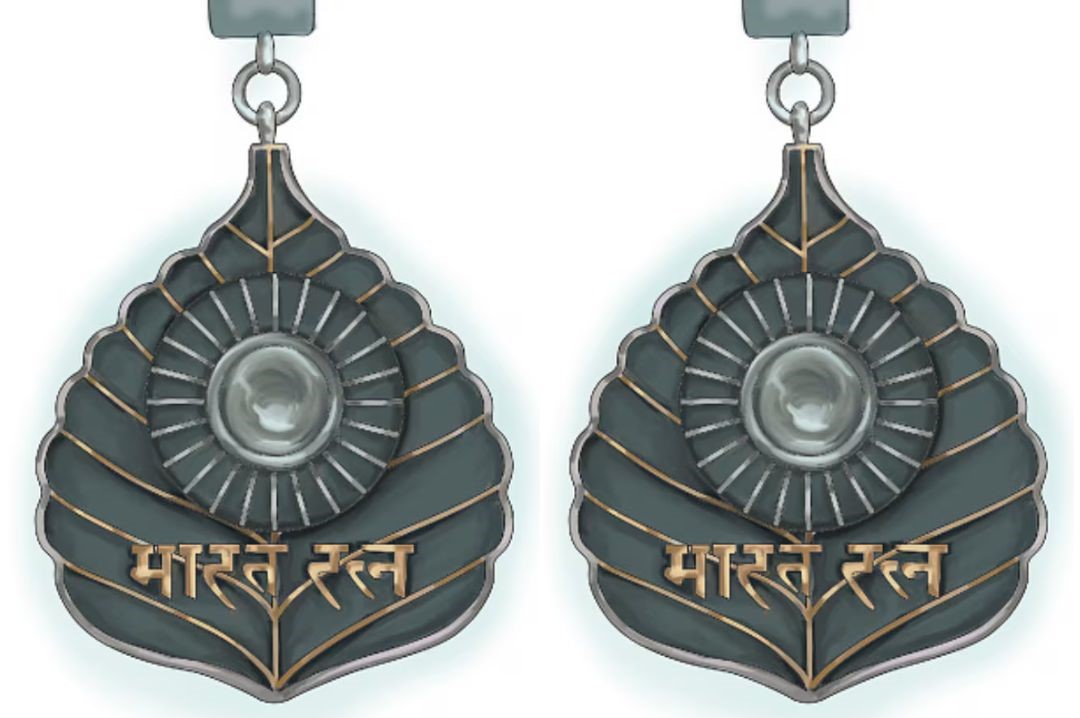
The awardee receives a certificate endorsed by the president along with a medal.The medal resembles a peepal leaf and measures 5.8 cm in length, 4.7 cm in width, and 3.1 mm in thickness.
The medal is made of bronze, featuring an embossed image of the sun in its center, which measures 1.6 cm across. On the reverse of the medal, the state emblem and the country's motto are inscribed in Devanagari script.
Only three Bharat Ratna awards are conferred each year. As per the constitution, the Bharat Ratna cannot be added as a prefix or suffix to the name of the recipient.
Also Read: Cannes 2026 Highlights, Date & Time, Tickets, Films & Celebrities
Bharat Ratna Prize Money
The Bharat Ratna Prize Money is actually zero, because this award does not include any cash reward. Instead, the recipient gets huge respect and special Bharat Ratna benefits like national recognition, protocol privileges, and in some cases travel and security facilities.
Benefits Of Bharat Ratna
Recipients of the Bharat Ratna are ranked at Position 7A in the Table of Precedence, sharing this status with prominent figures such as Governors, Former Presidents, and the Deputy Prime Minister, guaranteeing esteemed acknowledgment during official occasions.
Honorees obtain a diplomatic passport, which allows them entry to designated immigration lines, VIP lounges at airports, and various benefits exclusive to senior government officials.
Beneficiaries receive complimentary lifetime air travel in executive class on domestic routes, funded by the Government of India.
During official trips, they are treated like high-ranking government officials, enjoying protocol services and access to government accommodations.
Difference Between Bharat Ratna & Padma Award
Bharat Ratna is India’s highest civilian award. It is given for exceptional service or achievements of the highest order in any field.
Padma Awards are also top civilian honors, but they are below Bharat Ratna in rank and are given in three categories: Padma Vibhushan, Padma Bhushan, and Padma Shri.
|
Bharat Ratna vs Padma Award |
||
|
Point |
Bharat Ratna |
Padma Awards |
|
Rank |
Highest civilian award in India |
Lower than Bharat Ratna; includes three levels |
|
Purpose |
For exceptional service of the highest order |
For distinguished service and achievements |
|
Categories |
One single award |
Three awards: Padma Vibhushan, Padma Bhushan, Padma Shri |
|
Scope |
Very rare and given only to the most outstanding people |
Broader recognition across many fields |
The Bharat Ratna remains India's highest recognition for extraordinary service to the nation. It celebrates individuals whose contributions have left a lasting impact on India's history and society.
Also Read: Oscars 2026 Winners: One Battle After Another, Michael B Jordan & More
Frequently Asked Questions
Ans: The Bharat Ratna is India's highest civilian award. It was introduced in 1954 to honour individuals for exceptional service in fields such as public affairs, science, literature, art, sports, and social service.
Ans: The Prime Minister of India recommends the names to the President of India, who officially approves and confers the Bharat Ratna. There is no public nomination process.
Ans: Yes. The Bharat Ratna can be awarded posthumously to honour individuals whose exceptional contributions are recognised after their passing.
Ans: The latest Bharat Ratna recipients are Karpoori Thakur, P. V. Narasimha Rao, Chaudhary Charan Singh, M. S. Swaminathan, and L. K. Advani, who were honored in 2024.
Ans: Sachin Tendulkar is the youngest Bharat Ratna winner. He received the award in 2014 for his outstanding contribution to Indian cricket.